Gardener Camden: Recycling and Sustainability for Greener Gardens
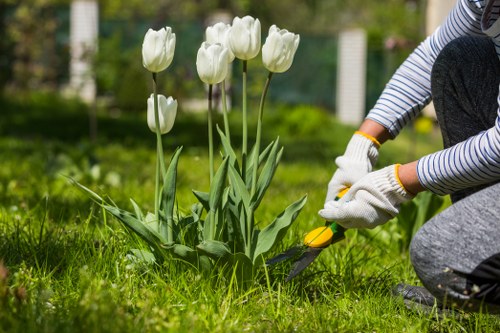
At Gardener Camden we transform everyday garden waste into an eco-friendly waste disposal area and community asset. Our approach integrates sustainable rubbish gardening area principles with practical waste separation so households and businesses in the borough can reduce landfill, boost recycling and support local reuse. We emphasise resource recovery, soil health and low-impact operations while working with residents and groups to create greener neighbourhoods.
 Camden’s borough-wide approach to waste separation supports clear streams for garden waste, food/organic material and dry recyclables. The emphasis on kerbside food caddies, separate green waste collections and clear labeling helps achieve consistent sorting at source. Residents are encouraged to separate: garden waste, food scraps and recyclables to keep compostable material within the local circular loop and reduce contamination in recycling bins.
Our Recycling Percentage Target and Tracking
Gardener Camden has set an ambitious target: a 60% recycling rate across our garden and green-waste services by 2030. This target aligns with local sustainability ambitions and is tracked through regular audits, transfer station reporting and partnership data. We measure progress using weight-based metrics and participation rates, and publish high-level results to show how the eco-friendly waste disposal area performs over time.
 To achieve this we coordinate with local transfer stations and consolidation points, reducing haulage miles and improving material quality before onward processing. Our partnerships with municipal and private transfer facilities are designed to speed sorting, increase capture of compostables and guarantee that recyclable organic matter is diverted from energy-from-waste or landfill.
Local Transfer Stations and Recycling Activity
Key to an effective green network are nearby transfer stations and material recovery centres. We work with local transfer stations across north London and adjacent boroughs to ensure garden waste, bulky green items and timber are processed correctly. Typical recycling activity relevant to our area includes:
- Kerbside green bin collections and community drop-off for garden waste
- Dedicated food/organic waste caddy collections supporting local composting
- Bulky garden item sorting at transfer hubs for reuse or chipping
These streams support a reliable sustainable rubbish gardening area model that turns cuttings, branches and leaves into compost, mulch and reclaimed materials for reuse in parks and community projects.
Partnerships with Charities and Community Groups
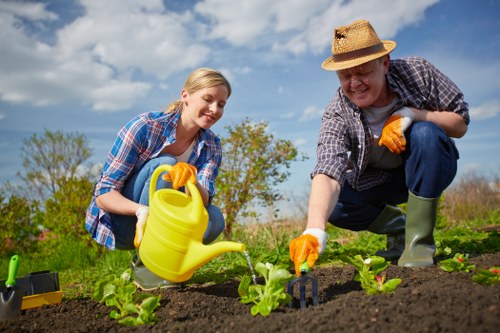
We partner with local charities, social enterprises and community gardens to extend the life of garden materials. Our collaborations include donation schemes for usable planters and sheds, redistribution of soil and compost to community growers, and working with reuse charities to repair and repurpose garden furniture. Partner types include:
- Local reuse charities and social enterprises
- Community allotments and food-growing projects
- Volunteer groups enabling redistribution and upcycling
These connections ensure that the sustainable rubbish gardening area is not just a disposal point but a hub for circular-economy activity, giving materials a second life while supporting local social value.
Low-Carbon Vans, Fleet and Last-Mile Solutions
Gardener Camden operates a mixed low-emission fleet designed to cut transport emissions and noise. Our vehicles include electric vans, plug-in hybrids and some ultra-low-emission diesel replacements where necessary during transition. We also invest in cargo bikes and electric trailers for short urban trips to and from collection points, reducing congestion and improving air quality in residential streets.
 Fleet highlights include:
- Electric vans for scheduled collections and small-scale transfers
- Hybrid vehicles for longer runs combined with route optimisation
- Cargo bikes for last-mile deliveries, deposits and small material transfers
Composting and Material Reprocessing
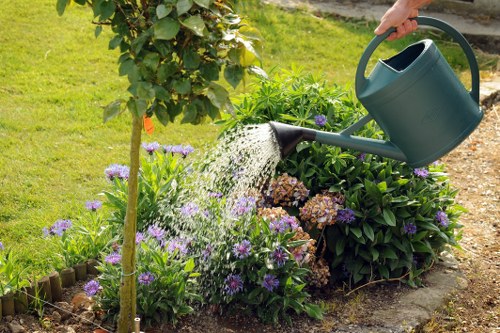
Composting is at the heart of our garden waste strategy. By diverting organic garden material into local composting facilities and on-site windrow systems we produce nutrient-rich soil conditioners used across community gardens and street trees. Separating food caddies and green waste at source improves compost quality and reduces contamination risks that often plague mixed collections.
Our vision for a resilient, low-impact rubbish garden area relies on continuous collaboration with residents, borough services and partners. Through clear separation, targeted transfer station use, charity partnerships and a low-carbon fleet we convert garden waste into value — restoring soils, supporting community growing and lowering the environmental footprint of everyday gardening.